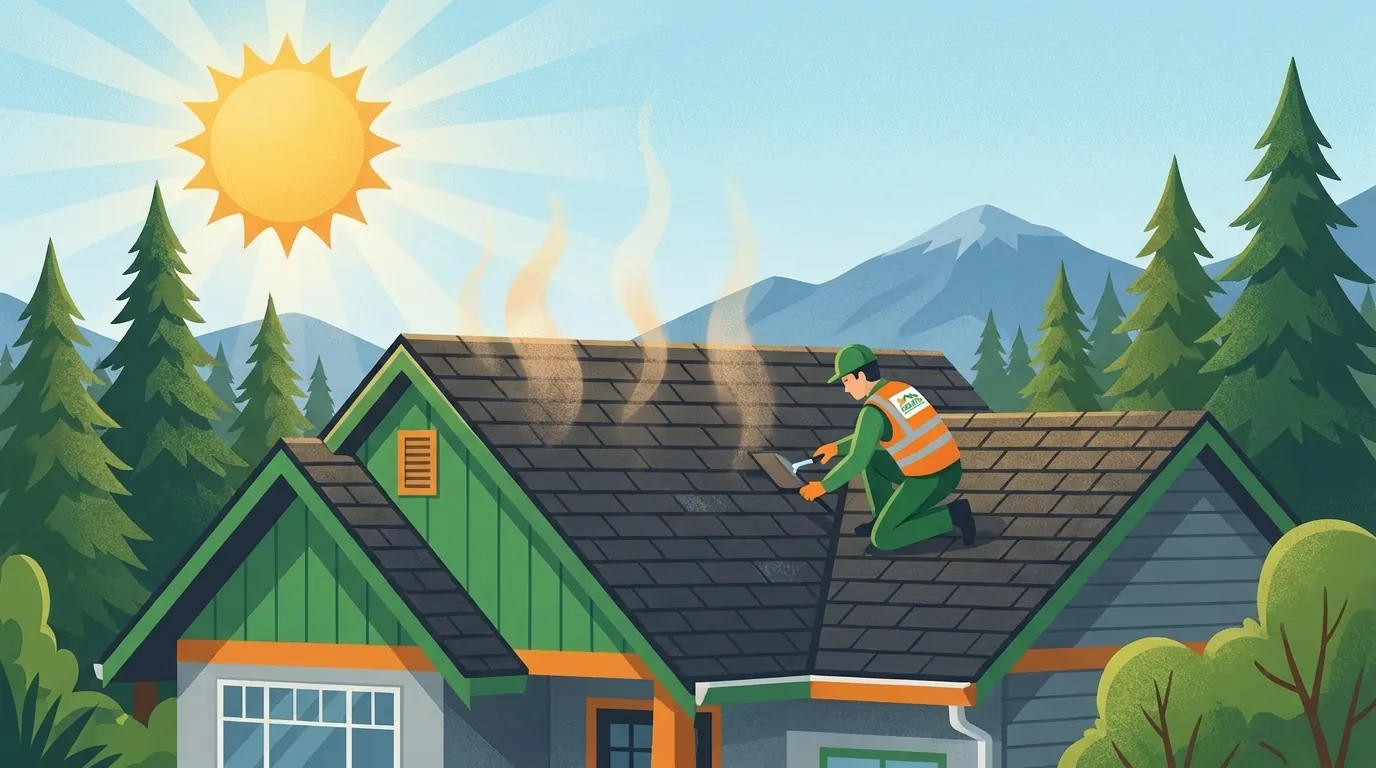
Asphalt shingles are the most common roofing material on Burnaby homes, and for good reason: they are durable, affordable, and well suited to our climate. But summer heat puts real stress on them. On a hot day, the surface of a dark shingle roof can climb well past 60 degrees Celsius, and that heat slowly changes how shingles behave. A little understanding and a little care go a long way toward keeping them in good shape.
Here is what heat does to asphalt shingles and how to look after them through the warm months.
What Heat Does to Asphalt Shingles
Drying and Brittleness
Asphalt shingles rely on oils in the asphalt to stay flexible. Sustained heat slowly drives those oils out, and over many summers the shingles become drier and more brittle. Brittle shingles crack rather than flex, which makes them more vulnerable to wind and foot traffic.
Thermal Cycling
The bigger issue is not heat alone but the daily swing between a hot afternoon and a cool Burnaby evening. Shingles expand when hot and contract when they cool, and that constant movement gradually loosens granules and works at the seams. Over time, thermal cycling is one of the main reasons shingles age.
Granule Loss
Those small granules on the surface are the shingle's sunscreen - they reflect sunlight and shield the asphalt underneath. Heat and thermal cycling speed up granule loss, and once enough are gone, the exposed asphalt deteriorates much faster.
Simple Summer Care That Helps
Keep the Roof Clear of Debris
Leaves, needles, and dirt trap heat against the shingle surface and hold moisture after summer showers. Keeping the roof reasonably clear reduces hot spots and helps shingles run cooler. A gentle clearing is enough; there is no need for harsh treatments.
Mind Your Attic Ventilation
This is the single most underrated factor in shingle life. When an attic cannot vent, summer heat builds up underneath and bakes the roof deck from below at the same time the sun bakes it from above. Good intake at the soffits paired with exhaust at the ridge keeps air moving and temperatures down, which protects shingles from both sides. If your upstairs rooms feel like an oven in July, poor ventilation is a likely culprit.
Check After Heat Waves and Windstorms
After a stretch of hot weather or a summer windstorm, it is worth a look from the ground with binoculars. Watch for curled edges, cracks, or shingles that have shifted. Catching a small problem early keeps it from becoming a leak in October.
Lighter Colours Run Cooler
Shingle colour affects how hot your roof gets. A near-black roof can run noticeably hotter than a light grey or tan one, and that extra heat speeds up the drying and thermal cycling described above. If you are not due for a new roof yet, this is simply worth keeping in mind for next time. If a replacement is on the horizon, a lighter or cool-rated shingle will handle Burnaby summers with less heat stress. Ventilation still matters more than colour, but the two work together.
A Simple Summer Rhythm
You do not need to fuss over an asphalt roof, but a light routine through the warm months keeps it healthy:
- Early summer - take a ground-level look for any winter damage, and check that gutters and downspouts are clear so summer showers drain properly
- Midsummer - clear any debris that has collected in valleys or behind the chimney, and glance at the attic on a hot day to sense whether it is venting
- Late summer - do a closer inspection before the fall rains, addressing any curled or cracked shingles while the weather is still dry
This rhythm catches small issues in the season when they are cheapest and easiest to fix, rather than during a rainy October.
Mistakes to Avoid
- Do not pressure wash shingles - the force strips granules and does far more harm than good. Roof cleaning should always be gentle
- Do not walk a hot roof - shingles are softest in peak heat and scuff or dent easily. Roof work in summer is best done in the cooler morning hours, and best left to professionals
- Do not ignore small repairs - a single cracked or lifted shingle is cheap to fix now and expensive to ignore once the rains return
- Do not seal over ventilation - blocking vents to stop a draft traps heat and moisture, shortening the life of the whole roof
When to Call a Professional
If you are seeing widespread granule loss, multiple cracked or curling shingles, or any sign of daylight or moisture in the attic, it is time for a professional look. Our roof maintenance service covers gentle cleaning, ventilation checks, and minor repairs that extend the life of an asphalt roof.
A professional check also goes beyond what you can see from the ground. A roofer will assess the flexibility and condition of the shingles, the state of the flashing around chimneys and vents, the sealant at roof penetrations, the balance between soffit intake and ridge exhaust, and the attic itself for signs of heat or moisture damage. Catching a worn flashing or a ventilation problem now is what keeps a dry summer roof from becoming a leaking fall one.
Watch Your Gutters Too
Heat-aged shingles shed extra granules, and those granules wash straight into the gutters, where they settle into a heavy grit that blocks downspouts. If you are finding more sediment than usual when you clean your gutters, your shingles may be telling you they are aging. Our sister company Smart Gutter Solutions can keep that grit from causing drainage problems.
Keep Your Roof Cool This Summer
Asphalt shingles handle Burnaby summers well when they are clean, well ventilated, and checked now and then. A little attention through the hot months pays off in years of added roof life. If you would like a professional to look things over, call us at 778-238-3280 or request a quote.
Frequently Asked Questions
How hot does an asphalt shingle roof get in summer?
Can I clean my shingles myself in summer?
Does attic ventilation really affect my shingles?
Is granule loss in summer normal?
Should I worry about shingles curling in the heat?
Need Professional Help?
Contact Smart Roofing Solutions for a free consultation and estimate.