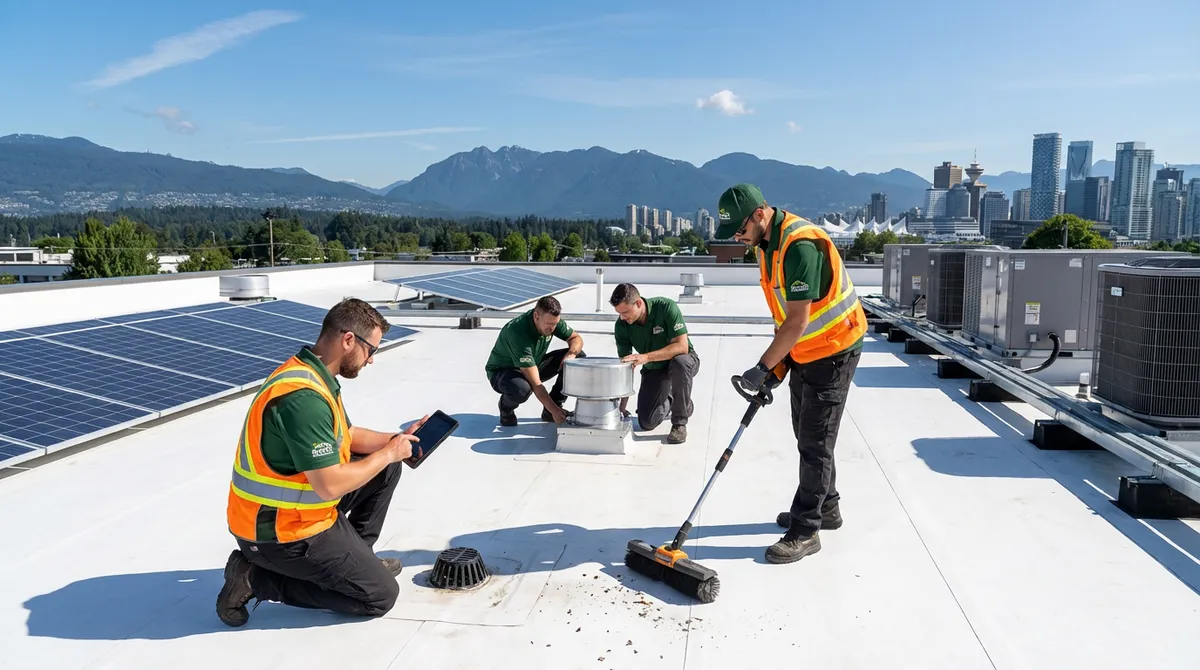
Commercial flat roofs are built tough, but they're not maintenance-free. In Metro Vancouver's wet climate, flat roofs face unique challenges that sloped residential roofs don't. Standing water, membrane wear, and drainage failures can all lead to expensive problems if they're not caught early.
Whether you manage a retail building, warehouse, office complex, or multi-unit property, here's what you need to know about keeping your flat roof in good shape.
Why Flat Roofs Need More Attention
Flat roofs (technically "low-slope" roofs) don't shed water the way pitched roofs do. Instead, they rely on membranes and drainage systems to move water off the surface. When any part of that system fails, water pools - and pooling water is the number one enemy of flat roofs.
Metro Vancouver's 1,200+ mm of annual rainfall means your flat roof's drainage system works hard from October through April. Even a small blockage or low spot can lead to ponding that stresses the membrane and accelerates deterioration.
Common Flat Roof Materials
Understanding your roofing material helps you know what to watch for:
TPO (Thermoplastic Polyolefin)
A popular choice for commercial buildings. TPO is heat-welded at the seams, creating strong, watertight joints. It reflects UV well and holds up in rain, but the seams can fail over time if the original installation was poor or if the building shifts.
EPDM (Rubber Roofing)
A synthetic rubber membrane that's been used on commercial buildings for decades. EPDM is durable and flexible, but its seams are adhesive-bonded rather than welded, making them more prone to separation over time. In Metro Vancouver's wet climate, seam integrity is critical.
Modified Bitumen
A multi-layer system using asphalt-based rolls. It's tough and handles foot traffic well, which matters for roofs with HVAC equipment or regular maintenance access. The overlapping layers provide redundancy, but damage to the top layer exposes the layers beneath to moisture.
PVC
Similar to TPO but with added chemical resistance. Common on buildings near restaurants or facilities that vent grease or chemicals through the roof. PVC membranes are heat-welded and hold up well in wet conditions.
The Spring Maintenance Checklist
Spring is the ideal time to inspect your flat roof after the heavy winter rain season. Here's what a thorough maintenance visit should cover:
Clear All Drains and Scuppers
Debris accumulates over winter - leaves, granules, sediment, and sometimes nesting materials from birds. Every drain, scupper, and downspout connection needs to be clear and flowing freely. Blocked drains are the most common cause of flat roof ponding.
Check for Ponding Water
After rain, walk the roof and look for areas where water is sitting more than 48 hours after the last rainfall. Ponding puts constant pressure on the membrane and can lead to leaks. Some ponding can be resolved by clearing drains; other cases may need tapered insulation to redirect flow.
Inspect Membrane Seams
Seam failures are where most flat roof leaks start. Check all heat-welded or adhesive seams for lifting, separation, or cracking. Pay extra attention to seams near penetrations (pipes, vents, HVAC curbs) where movement and vibration stress the membrane.
Examine Flashing and Edge Details
Flashing around roof edges, walls, and penetrations is vulnerable to wind uplift and thermal expansion. Look for gaps, cracks, or sections that have pulled away from the substrate. Even small flashing failures let water into the roof assembly.
Assess the Membrane Surface
Walk the entire roof looking for blisters, punctures, tears, or worn spots. Flat roofs with regular foot traffic (maintenance access, HVAC service) develop wear patterns that can thin the membrane over time.
Inspect the Gutter System
Commercial buildings often have larger gutter systems that handle high volumes of water. If your building's gutters are clogged, damaged, or improperly pitched, water backs up onto the roof surface. Commercial gutter maintenance should be part of your flat roof care plan.
How Often Should You Schedule Maintenance?
For commercial flat roofs in Metro Vancouver, we recommend:
- Twice-yearly inspections - spring (after the wet season) and fall (before it starts)
- After any major storm - high winds and heavy rain can cause immediate damage
- Whenever you notice interior signs - water stains on ceiling tiles, musty smells, or increased humidity in the building
Buildings with rooftop HVAC equipment or regular foot traffic should consider quarterly inspections, since the additional activity increases the risk of accidental membrane damage.
The Cost of Neglecting Flat Roof Maintenance
A small flat roof repair might cost a few hundred dollars. A full membrane replacement on a commercial building can run tens of thousands. The math is straightforward - regular maintenance is dramatically cheaper than emergency repairs or premature replacement.
Beyond the roof itself, water infiltration in a commercial building can damage inventory, equipment, and interior finishes. It can also trigger mold growth that creates health and liability concerns.
Work With a Commercial Roofing Specialist
Flat roofs require specific expertise that's different from residential roofing. The materials, installation techniques, and failure modes are all distinct. When choosing a contractor for your flat roof maintenance, look for experience with commercial membrane systems and familiarity with the drainage challenges specific to our climate.
Our team provides commercial roofing services across Metro Vancouver, including scheduled maintenance programs that keep your flat roof performing and help you avoid surprise repair bills. Call 778-238-3280 or request a quote to set up an inspection.
Frequently Asked Questions
How long does a commercial flat roof last?
What causes ponding water on a flat roof?
Can flat roof leaks be repaired without replacing the whole membrane?
How often should commercial flat roofs be inspected?
Is flat roof maintenance a tax-deductible expense for businesses?
Need Professional Help?
Contact Smart Roofing Solutions for a free consultation and estimate.