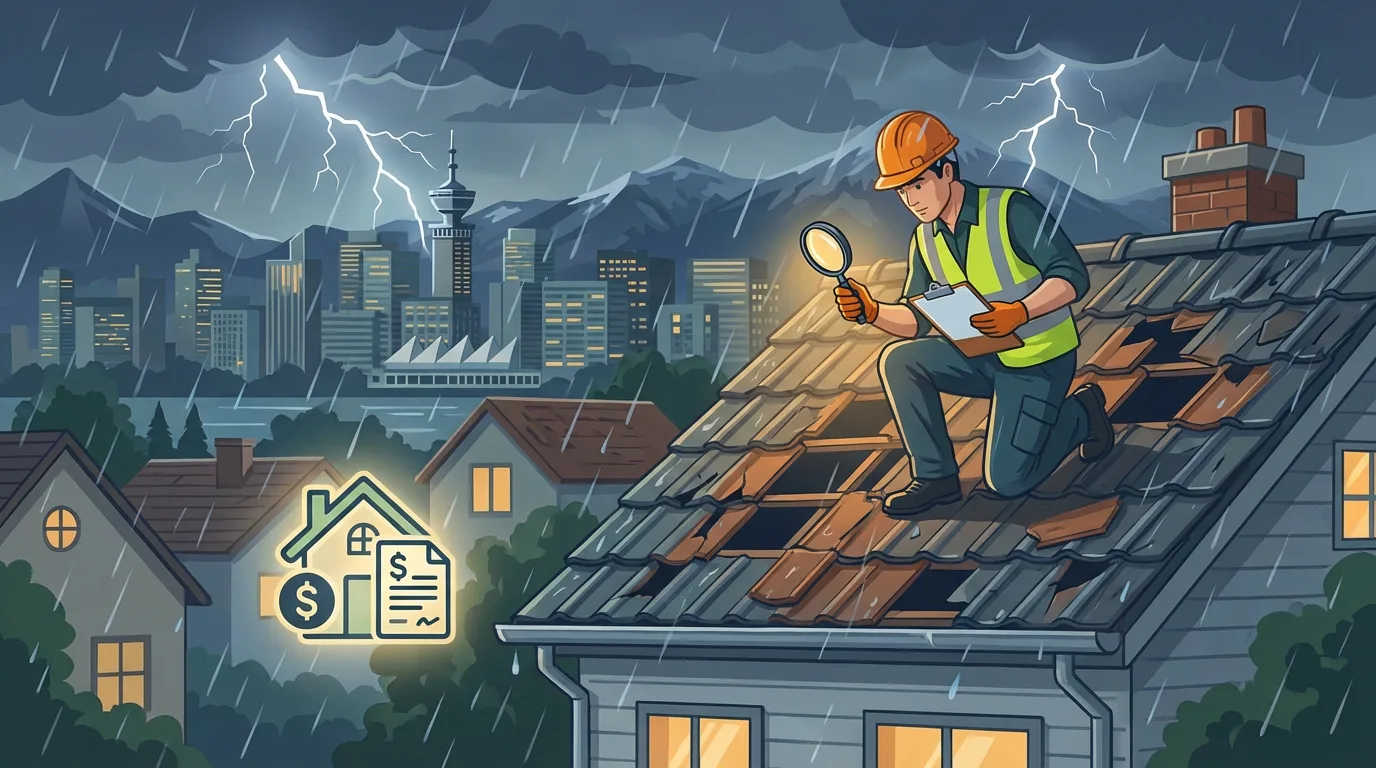
When a storm damages your roof or a sudden leak causes interior water damage, the last thing you want is to navigate the insurance claim process blind. Richmond homeowners deal with specific risks - windstorms off the Fraser River, heavy rain events, and occasionally fallen trees - that make roof damage claims more common than you might think.
Here's a practical guide to filing a roof insurance claim in Richmond, from documenting the damage to getting the work done right.
What Your Homeowner's Insurance Typically Covers
Most standard homeowner's policies in BC cover roof damage caused by:
- Windstorms - shingles blown off, flashing torn loose, or structural damage from wind
- Falling objects - tree branches or trees that land on your roof
- Hail damage - dents, cracks, or punctures to roofing material
- Weight of ice and snow - structural stress from heavy accumulation
- Water damage from a sudden event - a pipe burst or sudden roof failure (not gradual deterioration)
What's Typically NOT Covered
- Wear and tear - a roof that's simply old and deteriorating
- Lack of maintenance - damage that could have been prevented with routine upkeep
- Gradual leaks - slow leaks that developed over time rather than from a specific event
- Cosmetic damage - dents that don't affect the roof's function
- Flood damage - requires separate flood insurance
This distinction matters. Insurance covers sudden, accidental damage - not the natural aging of your roof. If your 25-year-old shingles are failing because they've reached end of life, that's a maintenance issue, not a claimable event.
Step 1: Document the Damage Immediately
As soon as it's safe to do so after an event, start documenting:
- Take photos and video from multiple angles, including close-ups of damaged areas and wide shots showing the overall scope
- Photograph the interior if water has entered your home - ceiling stains, wet insulation, damaged belongings
- Note the date and time of the event that caused the damage
- Save weather reports or news coverage of the storm - this supports your claim timeline
- Keep damaged materials until the adjuster has inspected them
For Richmond specifically, windstorms that come up the Fraser River can cause localized damage that's easy to miss from the ground. Homes in Steveston, Broadmoor, and along the riverfront in East Richmond are particularly exposed. Take photos of your full roofline, not just the obvious damage.
Step 2: Prevent Further Damage
Your insurance policy requires you to take reasonable steps to prevent additional damage. This is called your "duty to mitigate." If you have an active leak:
- Place buckets or tarps to catch water inside
- If it's safe, apply a temporary tarp over the damaged area on the roof
- Move belongings away from the affected area
- Document your mitigation efforts with photos
You can hire a roofer to do emergency tarping if you can't safely do it yourself. These emergency costs are typically reimbursable as part of your claim. Keep receipts for everything.
Step 3: Contact Your Insurance Company
Call your insurer to file the claim as soon as possible. Most policies have a time limit for reporting damage - often 24-72 hours for storm events. When you call:
- Have your policy number ready
- Describe the event that caused the damage (the storm, the fallen tree, etc.)
- Describe the visible damage without speculating on costs
- Ask about your deductible and claim process timeline
- Ask if they require you to use specific contractors or if you can choose your own
Step 4: Get a Professional Roof Inspection
Before the insurance adjuster visits, or as soon as possible after, get an independent roof inspection from a qualified roofer. This serves several purposes:
- Identifies all damage - some damage isn't visible from the ground or even from a quick visual check. A professional inspector checks the full system including flashing, underlayment, decking, and attic space
- Provides documentation - a written inspection report with photos carries weight with insurance adjusters
- Gives you an accurate repair estimate - having your own estimate prevents you from being undervalued by the insurer's assessment
- Catches related damage - storm damage to your roof often affects your gutter system too. Bent gutters, disconnected downspouts, and debris-clogged channels should be documented. Our sister company Smart Gutter Solutions can assess gutter damage as part of the process
Step 5: Work With the Insurance Adjuster
The insurance company will send an adjuster to inspect the damage. Here's how to make that process go smoothly:
- Be present during the inspection so you can point out all damage areas
- Share your roofer's inspection report and repair estimate
- Don't agree to a settlement on the spot if you think the assessment is too low
- Take notes during the adjuster's visit
- Ask questions about anything you don't understand in their assessment
If the adjuster's estimate is significantly lower than your roofer's, you have the right to negotiate. Your independent inspection report is your leverage.
Step 6: Understand Your Settlement Options
Insurance typically offers two types of settlement:
Actual Cash Value (ACV)
The depreciated value of your roof at the time of damage. If your roof was 15 years into a 25-year lifespan, the payout reflects that reduced remaining value. This means you'll likely pay a significant portion of the replacement cost out of pocket.
Replacement Cost Value (RCV)
The full cost to replace your roof with similar materials without depreciation. RCV policies cost more in premiums but provide much better coverage when you need it. Check which type your policy includes before filing.
Step 7: Choose Your Contractor
Most BC policies let you choose your own roofing contractor. This is important - you want someone who:
- Has experience with insurance restoration work
- Will work directly with your insurance adjuster if needed
- Provides detailed documentation that meets insurance requirements
- Guarantees their workmanship with a written warranty
Avoid "storm chasers" - contractors who show up unsolicited after a weather event offering to handle your insurance claim. These operators often do substandard work and disappear before warranty issues surface.
Common Mistakes That Delay or Reduce Claims
Waiting Too Long to File
Report damage promptly. Delays give the insurer grounds to question whether the damage was from the claimed event.
Not Documenting Enough
More photos and documentation is always better. The adjuster sees your roof for 30 minutes - your documentation fills in the gaps.
Accepting the First Offer Without Review
The initial settlement offer is negotiable. If it doesn't cover the full cost of proper repair, push back with your contractor's estimate.
Making Permanent Repairs Before the Adjuster Visits
Emergency tarping and water mitigation are expected. But don't start permanent repairs until the adjuster has inspected the damage, or you may compromise your claim.
Not Reading Your Policy
Understand your deductible, coverage limits, and exclusions before you need to use them. A $1,000 deductible on a $3,000 repair means you're covering a significant portion yourself.
Richmond-Specific Considerations
Richmond's geography creates some unique claim scenarios:
- Wind damage from Fraser River storms is the most common claim type for Richmond homes. The flat, open terrain offers little wind protection
- Tree damage is common in Burkeville and along Garden City, where mature trees overhang residential roofs
- Water damage claims need careful documentation in Richmond because the high water table can complicate the distinction between roof leaks and ground-level moisture intrusion
Need a Roof Inspection for Your Claim?
If your Richmond roof has been damaged and you need a professional inspection to support your insurance claim, we can help. Our inspection reports include detailed photos, damage assessments, and repair estimates that insurance adjusters accept. Call us at 778-238-3280 or request a quote.
Frequently Asked Questions
Does homeowner insurance cover roof replacement?
How long do I have to file a roof insurance claim?
Should I get my own roof inspection before the adjuster comes?
Can I choose my own roofing contractor for insurance work?
What if the insurance payout doesn't cover the full repair cost?
Need Professional Help?
Contact Smart Roofing Solutions for a free consultation and estimate.