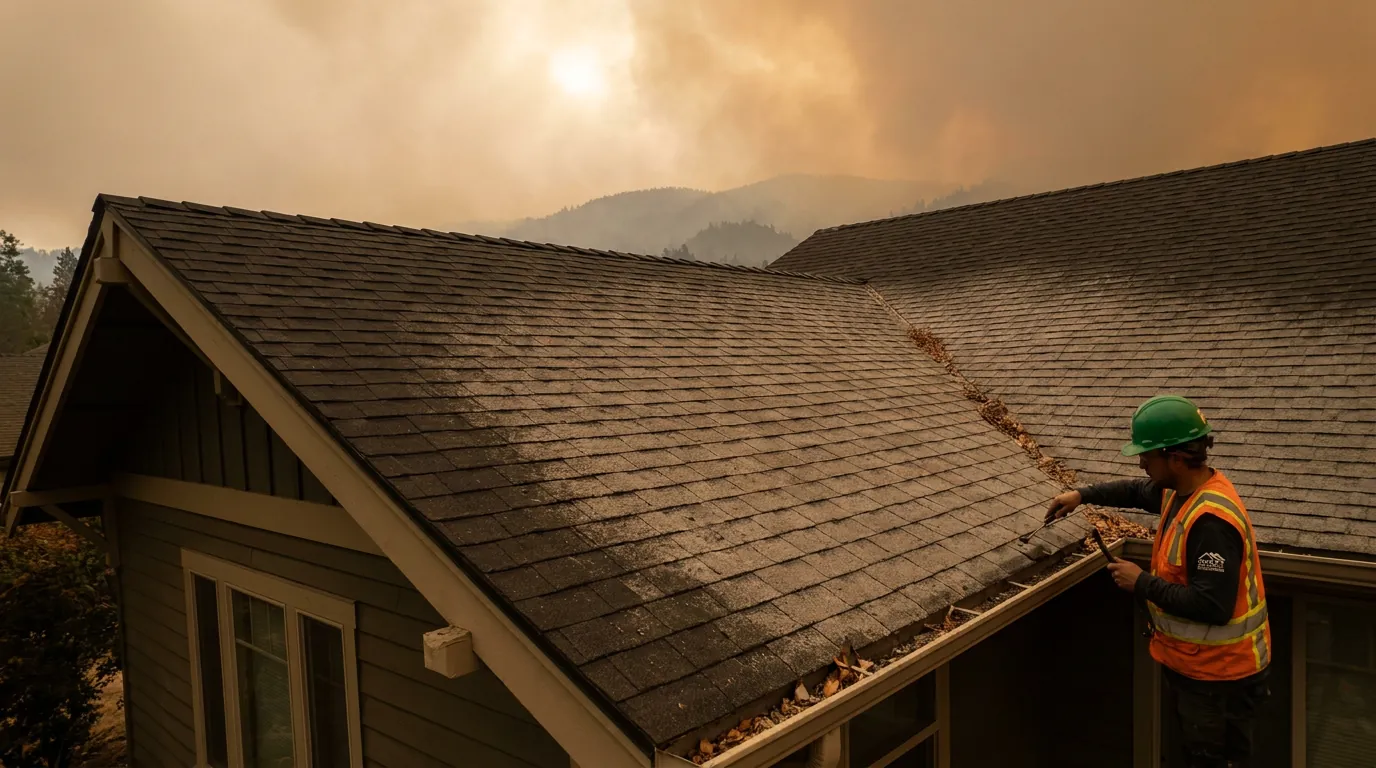
Wildfire season is now a regular part of summer in British Columbia, and its effects reach far beyond the fire lines themselves. Even homes in Metro Vancouver, well away from any active fire, can see hazy skies, a layer of fine ash, and air thick with smoke. The most serious risk, though, is the one people think about least: wind-carried embers that can travel kilometres ahead of a fire and land on roofs. Your roof is your home's largest exposed surface, which makes it the front line for fire safety.
Here is how wildfires threaten a roof and what you can do to reduce the risk through the season.
How Wildfire Threatens Your Roof
Embers Are the Main Danger
Most homes that ignite during a wildfire are not lost to a wall of flame; they are lost to embers. These small burning fragments ride the wind far from the fire and settle on roofs, in valleys, and in gutters. If they land on dry debris, a pile of leaves, accumulated needles, or built-up gutter litter, they can smoulder and ignite. A clean, well-maintained roof gives embers nothing to catch on; a debris-laden one gives them fuel.
Ash and Smoke Residue
Even without embers, falling ash settles across the roof and collects in valleys and gutters. Wet ash becomes a gritty, mildly corrosive sludge that holds moisture against roofing materials and clogs drainage. Smoke residue can also leave a film on the surface. Neither is an emergency, but both are worth cleaning up properly once the air clears.
Your Roof's Role in Fire Resistance
Roofing materials carry fire-resistance ratings, and the material matters:
- Metal roofing is non-combustible and among the best choices for fire resistance
- Asphalt shingles rated Class A offer strong fire resistance and are the most common option on local homes
- Untreated cedar shake is the most vulnerable to ignition, which is worth weighing if you are replacing a wood roof in a fire-prone area
If you are planning a new roof and live where wildfire risk is a concern, fire resistance is worth factoring into the material choice during your roof replacement planning.
Reducing Ember Risk
The goal is to leave embers nothing to ignite. Through fire season:
- Keep the roof clear of leaves, needles, and branches, especially in valleys and behind the chimney where debris collects
- Clear the gutters, since dry gutter debris is one of the most common ignition points from embers
- Screen vents with fine metal mesh so embers cannot blow into the attic through soffit, gable, or roof vents
- Trim overhanging branches and keep the area around the roofline free of dead vegetation
- Maintain defensible space on the ground around your home, clearing dry material near the walls and foundation
These steps matter even for homes far from the nearest fire, because embers travel so far on the wind.
Gutters Are Part of the Picture
Roofs and gutters share the same ember risk, and the gutter is often the weak link. Dry leaves and needles packed into a gutter are exactly the kind of fuel a stray ember needs, sitting right at the edge of your roof. Clearing them out is one of the highest-value things you can do before and during fire season. Our sister company Smart Gutter Solutions covers the gutter side of wildfire readiness in detail, and the two together close off the most common ember-ignition points around your home.
A Quick Wildfire-Season Roof Checklist
When smoke season approaches, a short routine keeps your roof ready:
- Clear leaves, needles, and branches from the roof surface, valleys, and behind the chimney
- Empty the gutters and downspouts of dry debris
- Check that soffit, gable, and roof vents are screened with fine metal mesh
- Trim back branches overhanging the roof
- Clear dead vegetation from the ground near the walls and foundation
Running through this before the worst of the season, rather than during a smoky week, makes it far less stressful and far more effective.
When Smoke Lingers for Days
Long smoke events do more than reduce visibility. Fine ash works into every crevice of the roof, and repeated days of fallout build up in gutters and valleys faster than you might expect. If a smoke event stretches on, it is worth checking and clearing the roof partway through rather than waiting for it all to end, especially if rain is in the forecast, since wet ash is much harder to remove and can stain and corrode if left to sit. Keeping on top of it as it accumulates is easier than tackling a thick, hardened layer later.
After Smoke and Ash: Cleaning Up
Once the air clears, clean ash off the roof and out of the gutters before the next rain turns it to sludge. Use gentle methods only. Never pressure wash a shingle roof, as it strips the protective granules; a soft rinse and careful clearing are enough. Wear a proper mask if there is still ash in the air, and as always, leave any work that requires being up on the roof to dry, safe conditions or to a professional.
When to Have Your Roof Checked
After a heavy ash season, or if embers reached your property, it is worth having the roof looked over. A professional can check for any scorching, confirm vents and screening are intact, and clear debris from spots that are hard to reach safely. Regular roof maintenance keeps the roof clear through the season, and a roof inspection gives you peace of mind that nothing was missed.
Be Ready Before the Smoke Arrives
Wildfire readiness is mostly about removing fuel: a clean roof, clear gutters, screened vents, and trimmed branches give embers nowhere to take hold. None of it is complicated, but it is far easier to do before fire season peaks than during a smoky, stressful week. To get your roof checked and cleared ahead of the season, call us at 778-238-3280 or request a quote.
Frequently Asked Questions
Can my roof catch fire from a wildfire that is far away?
What roofing material is most fire-resistant?
How do I protect my roof during wildfire season?
How do I clean ash off my roof?
Are my gutters a wildfire risk?
Need Professional Help?
Contact Smart Roofing Solutions for a free consultation and estimate.