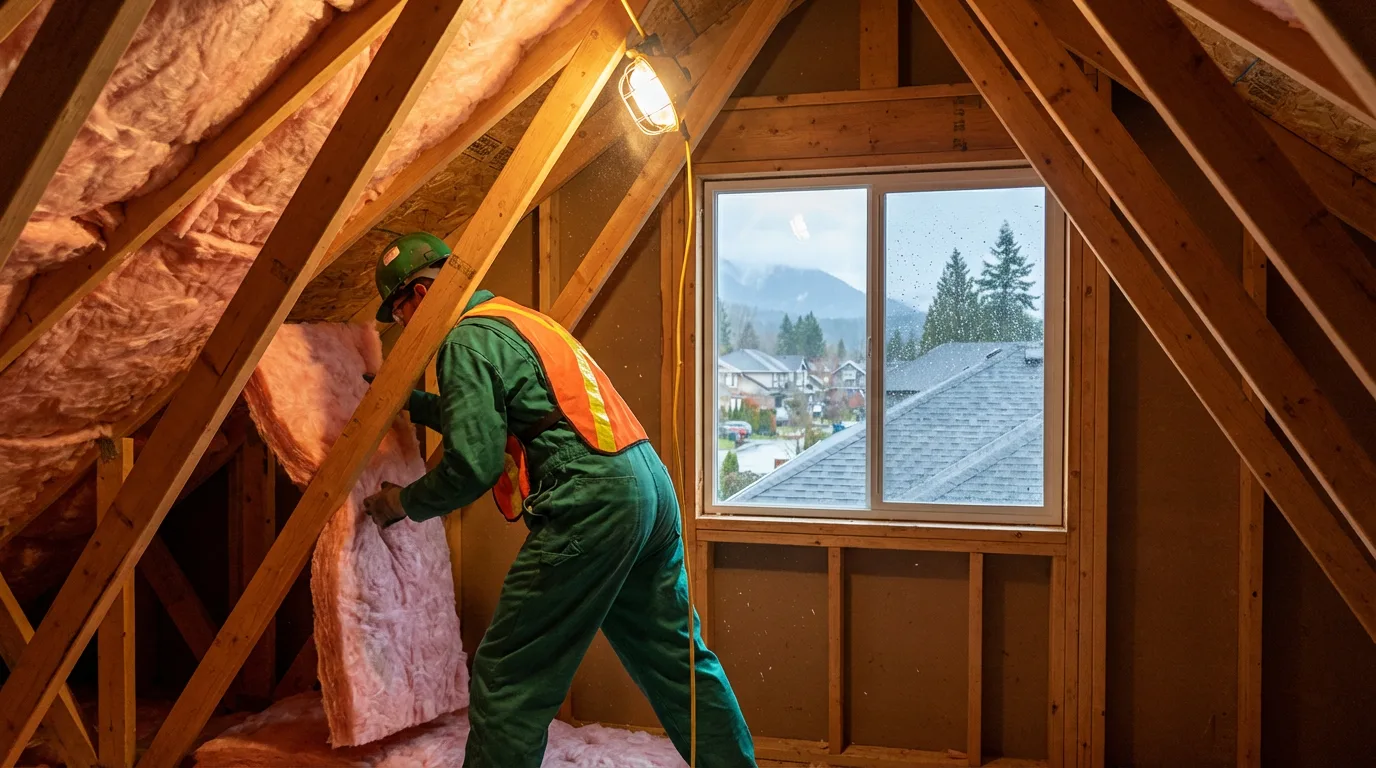
Most homeowners think of attic insulation as an energy efficiency issue - and it is. But in Port Coquitlam's climate, your attic insulation also directly affects how long your roof lasts, whether you get ice dams in winter, and how comfortable your home feels year-round. Getting it right saves you money on both energy bills and roof maintenance.
Here's how attic insulation connects to your roof's health, what to look for, and when to upgrade.
How Attic Insulation Affects Your Roof
Heat Loss in Winter
When your attic is poorly insulated, heat from your living space rises into the attic and warms the roof deck from below. This causes several problems:
- Uneven snow melt leads to ice dams at the eaves. Melted snow runs down to the cold gutter line and refreezes, creating a dam that backs water under your shingles
- Moisture from warm air condenses on the cold underside of the roof deck. Over time, this condensation causes mold, rot, and structural damage to the plywood sheathing
- Higher heating bills because you're losing heat through the roof instead of keeping it in your living space
Port Coquitlam gets occasional snow events and sustained cold snaps in January and February. Homes in Citadel Heights and along the hillside are more exposed to cold temperatures, making insulation quality especially important.
Heat Buildup in Summer
In summer, an under-insulated attic does the opposite - it lets heat radiate down into your living space. Without adequate insulation:
- Your roof bakes from both sides - UV from above and trapped heat from below accelerate shingle deterioration
- Attic temperatures can exceed 60 degrees Celsius on hot summer days
- Your air conditioning works harder (and costs more) to compensate for the heat gain
For homes in the lower areas of Port Coquitlam near the Pitt River, where summer temperatures can be several degrees warmer than the Tri-Cities average due to the valley effect, this is a real factor in energy costs.
Signs Your Attic Insulation Needs Attention
From Inside Your Home
- Uneven temperatures between rooms, especially upper floors being significantly warmer in summer or colder in winter
- Ice dams forming at the eaves during cold weather
- High energy bills that don't match your home's size or your heating/cooling habits
- Drafts near ceilings or around recessed lighting on the top floor
From the Attic
- Visible floor joists - if you can see the joists above the insulation, there isn't enough
- Compressed or settled insulation that's lost its loft (thickness)
- Moisture, staining, or mold on the underside of the roof deck
- Daylight visible through gaps in the insulation or around penetrations
- Missing insulation around attic hatches, ductwork, or electrical boxes
From the Roof
- Premature shingle aging on some sections and not others
- Moss or algae growth in patterns that follow warm spots below
- Ridge line melting snow while the eaves stay frozen (classic ice dam sign)
A roof inspection includes a look at attic conditions from above, which can reveal insulation problems that aren't obvious from inside the house.
How Much Insulation Do You Need?
BC Building Code recommends a minimum of R-50 for attic insulation in new construction. Many older Port Coquitlam homes - especially those built before 1980 - have R-20 or less, which is well below current standards.
Insulation Types
Blown-in fiberglass or cellulose is the most common choice for upgrading existing attics. It fills gaps around obstacles and can be added over existing insulation without removing it.
- Fiberglass blown-in: R-2.5 per inch; you need about 16-20 inches for R-50
- Cellulose blown-in: R-3.7 per inch; you need about 13-14 inches for R-50
Batt insulation (fiberglass or mineral wool) works well in attics with regular joist spacing and few obstacles. However, batts are harder to install perfectly around wiring, pipes, and ductwork, which creates gaps.
Spray foam provides the highest R-value per inch and doubles as an air barrier, but it's significantly more expensive. It's most cost-effective for targeted areas like attic hatches, rim joists, and around complex penetrations.
The Ventilation Connection
Insulation and ventilation work together. Adding insulation without adequate ventilation can actually make moisture problems worse by trapping warm, humid air in the attic.
A properly ventilated attic needs:
- Soffit vents at the eaves to let cool air in
- Ridge vents or roof vents at the top to let warm air and moisture out
- Clear baffles between the insulation and roof deck at the eaves to maintain airflow
When soffit vents are blocked by insulation - a common problem in older Port Coquitlam homes - moisture accumulates and damages the roof deck from below. We see this frequently during roof replacements and it's one of the most impactful issues to correct.
Energy Savings You Can Expect
Upgrading from R-20 to R-50 in a typical Port Coquitlam home can reduce heating costs by 15-25%, depending on your heating system and home design. On a gas heating bill of $150-$250 per month in winter, that's $25-$60 per month in savings.
In summer, improved insulation reduces cooling demand. For homes with air conditioning, the savings are similar. For homes without AC, the comfort improvement is significant - upper floors that used to be uncomfortably hot become livable.
The payback period for attic insulation upgrades is typically 3-5 years through energy savings alone - faster than almost any other home improvement.
BC Energy Rebates
BC Hydro and FortisBC offer rebates for insulation upgrades through the CleanBC program. Depending on your current insulation level and what you upgrade to, rebates can cover a meaningful portion of the project cost. Check current rebate availability before starting your project - the programs change periodically.
When to Upgrade
During a Roof Replacement
If you're already replacing your roof, it's the ideal time to assess and upgrade attic insulation. The roof deck is exposed, ventilation can be corrected, and any moisture damage can be addressed as part of the same project. Our residential roofing service includes attic assessment as part of every replacement project.
Before Summer
Getting insulation upgraded in spring means you benefit from reduced heat gain through the entire summer. Port Coquitlam's June-August temperatures make this timing particularly worthwhile.
When You Notice Signs
Don't wait for a roof replacement if you're seeing ice dams, moisture problems, or high energy bills. Insulation upgrades can be done independently at any time.
The Gutter Factor
Poor attic insulation causes ice dams, and ice dams damage gutters. When ice builds up in gutter channels, it bends, warps, and pulls gutters away from the fascia. If your gutters show signs of ice damage, the root cause may be in your attic, not the gutter system. Our sister company Smart Gutter Solutions can assess gutter condition while we look at the insulation and ventilation above.
Start With an Assessment
If you're not sure where your attic insulation stands, we can check during a roof inspection. We'll assess insulation depth, ventilation airflow, moisture signs, and overall attic condition - and give you a clear picture of what improvements would make the biggest impact. Call us at 778-238-3280 or request a quote.
Frequently Asked Questions
How much attic insulation do I need?
Can I add insulation on top of existing insulation?
Does attic insulation really affect my roof's lifespan?
How much does attic insulation cost?
Are there rebates for attic insulation in BC?
Need Professional Help?
Contact Smart Roofing Solutions for a free consultation and estimate.