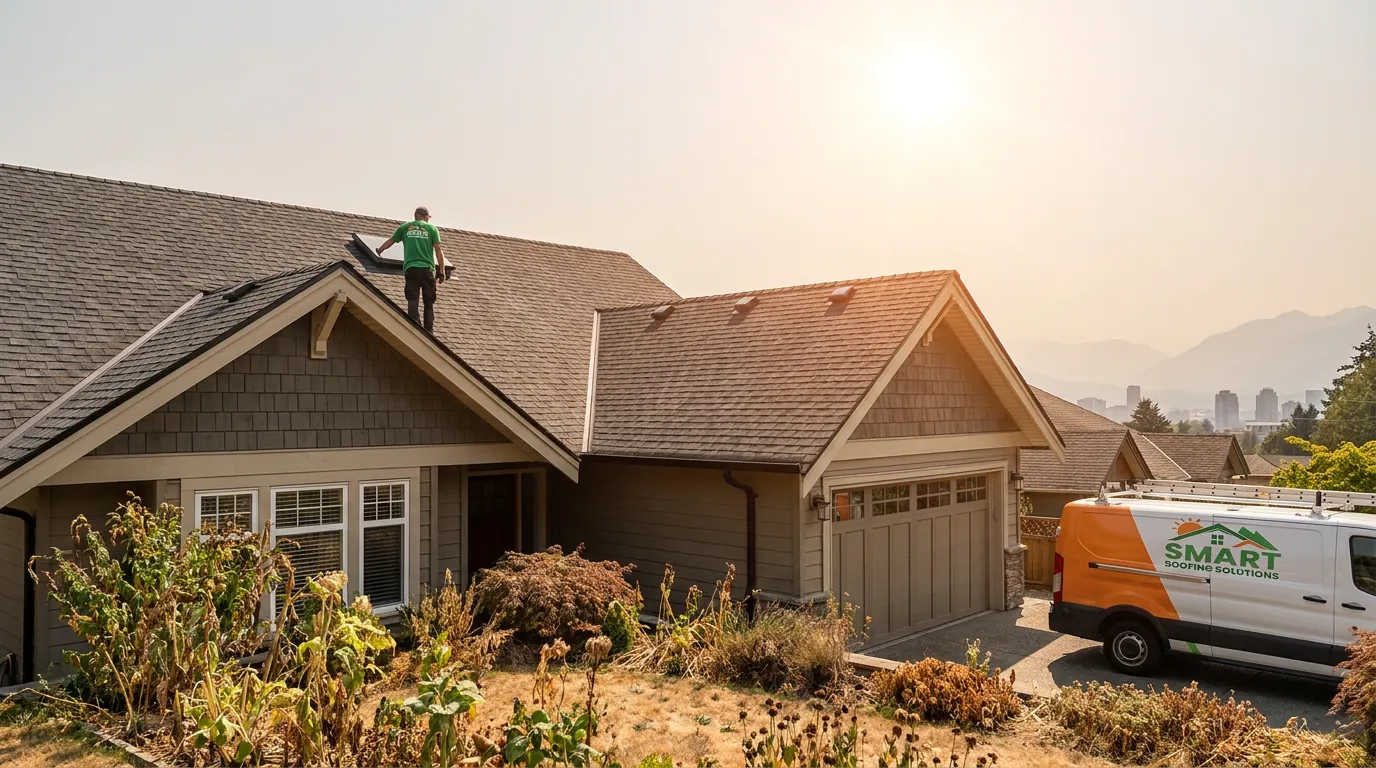
Vancouver summers used to be reliably mild, but the last several years have brought longer, hotter heat waves than the city was built for. Those extreme stretches are hard on people and homes alike, and your roof takes the brunt of it. Sitting in direct sun all day, a roof surface can reach temperatures far higher than the air around it, and sustained heat changes how roofing materials behave.
Here is what a heat wave does to your roof, the signs to watch for afterward, and how to protect your home through the hottest days of summer.
How Extreme Heat Stresses a Roof
Shingles
Asphalt shingles soften in extreme heat and become more easily scuffed or damaged. More importantly, the oils that keep them flexible slowly bake out under repeated heat, leaving shingles drier and more brittle over time. The daily swing between a scorching afternoon and a cooler night makes shingles expand and contract, which gradually loosens the protective granules on the surface.
Flashing and Sealants
The metal flashing around chimneys, skylights, and vents expands and contracts with heat too, and it moves at a different rate than the roofing around it. Over many hot cycles, that movement can work sealants loose and open small gaps. The caulking and sealant at roof penetrations dries out faster in intense heat, which is why these spots are common starting points for leaks once the rains return.
The Attic
During a heat wave, an under-ventilated attic turns into an oven. Temperatures up there can climb dramatically, baking the underside of the roof deck while the sun heats the shingles from above. That double exposure ages the roof from both sides and pushes heat down into your living space, making the whole top floor uncomfortable and your cooling work harder.
Skylights, Vents, and Other Weak Points
Anywhere the roof is interrupted feels heat stress more sharply. Skylights, plumbing vent boots, and attic vents all involve seals and flashing that expand and contract at a different rate than the surrounding roof. After a long hot spell, these are among the first places to check for lifted metal or dried-out sealant. A small touch-up at a vent boot or skylight edge now is far cheaper than tracing a ceiling stain back to it in November.
Signs to Watch For After a Heat Wave
Once the temperature drops, take a look from the ground with binoculars and note anything unusual:
- Curled or lifted shingle edges, especially on south and west-facing slopes that get the most afternoon sun
- Cracked or blistered shingles that look dried out
- Granules collecting at the bottom of downspouts, a sign the surface is shedding faster
- Visible gaps or lifted metal around flashing at chimneys and vents
- A noticeably hotter upper floor than usual, which can point to attic ventilation that is not keeping up
What You Can Do During a Heat Wave
You cannot change the weather, but a few habits help your roof and home cope:
- Keep the attic venting freely - make sure soffit vents are not blocked by insulation and that any attic fans or vents are clear and working
- Close blinds and curtains on the sunny side of the house to reduce heat load on the rooms below the roof
- Stay off the roof - shingles are softest and most easily damaged in peak heat, and rooftop work in extreme temperatures is a safety risk best left for cooler hours
- Run ceiling and portable fans to keep air moving so your home is less dependent on the attic staying cool
After the Heat: A Quick Check
When the heat wave passes, a short check pays off. Look over the roof from the ground, clear any debris from valleys and around the chimney, and confirm gutters and downspouts are clear so the next summer storm drains cleanly. If anything looks off, note its location so you can point a professional to it. Catching a lifted shingle or loose flashing now, while it is dry, prevents a leak when the fall rains arrive.
Protecting Against Future Heat
If heat is becoming a yearly problem for your home, two upgrades make the biggest difference over time. Improving attic ventilation keeps heat from building up under the roof, and it is one of the most cost-effective things you can do for both comfort and roof life. When the roof is eventually due for replacement, choosing a lighter or cool-rated shingle reduces how much heat the surface absorbs in the first place. Regular roof maintenance keeps ventilation clear and catches heat-related wear before it becomes a leak.
Heat Is Harder on an Older Roof
A heat wave is tougher on a roof that is already worn. Newer shingles still hold enough of their oils to flex through the temperature swings, but an older roof that has lost flexibility is far more likely to crack, curl, or shed granules heavily during an extreme stretch. If your roof is more than 15 years old, a run of very hot days can noticeably accelerate its decline. That is worth keeping in mind when you weigh whether to repair or plan a replacement, because the summers ahead are unlikely to get any milder.
When to Call a Professional
If you spot curled or cracked shingles across multiple slopes, loose flashing, or signs of moisture in the attic, it is worth a professional look. A roof inspection after a hard summer assesses how the roof is holding up and whether a roof repair is needed before the weather turns. Acting while conditions are dry is always easier and cheaper than reacting to a leak in the rain.
Stay Ahead of the Heat
Vancouver's hotter summers are likely here to stay, and a roof that is well ventilated and well maintained handles them far better. A quick check after each heat wave, plus attention to ventilation, keeps small heat damage from turning into fall leaks. If you would like your roof assessed after a hot stretch, call us at 778-238-3280 or request a quote.
Frequently Asked Questions
Can a heat wave actually damage my roof?
Which part of my roof is most affected by heat?
Why does my upstairs get so hot during a heat wave?
Should I go up on my roof to check it during hot weather?
What should I check after a heat wave ends?
Need Professional Help?
Contact Smart Roofing Solutions for a free consultation and estimate.