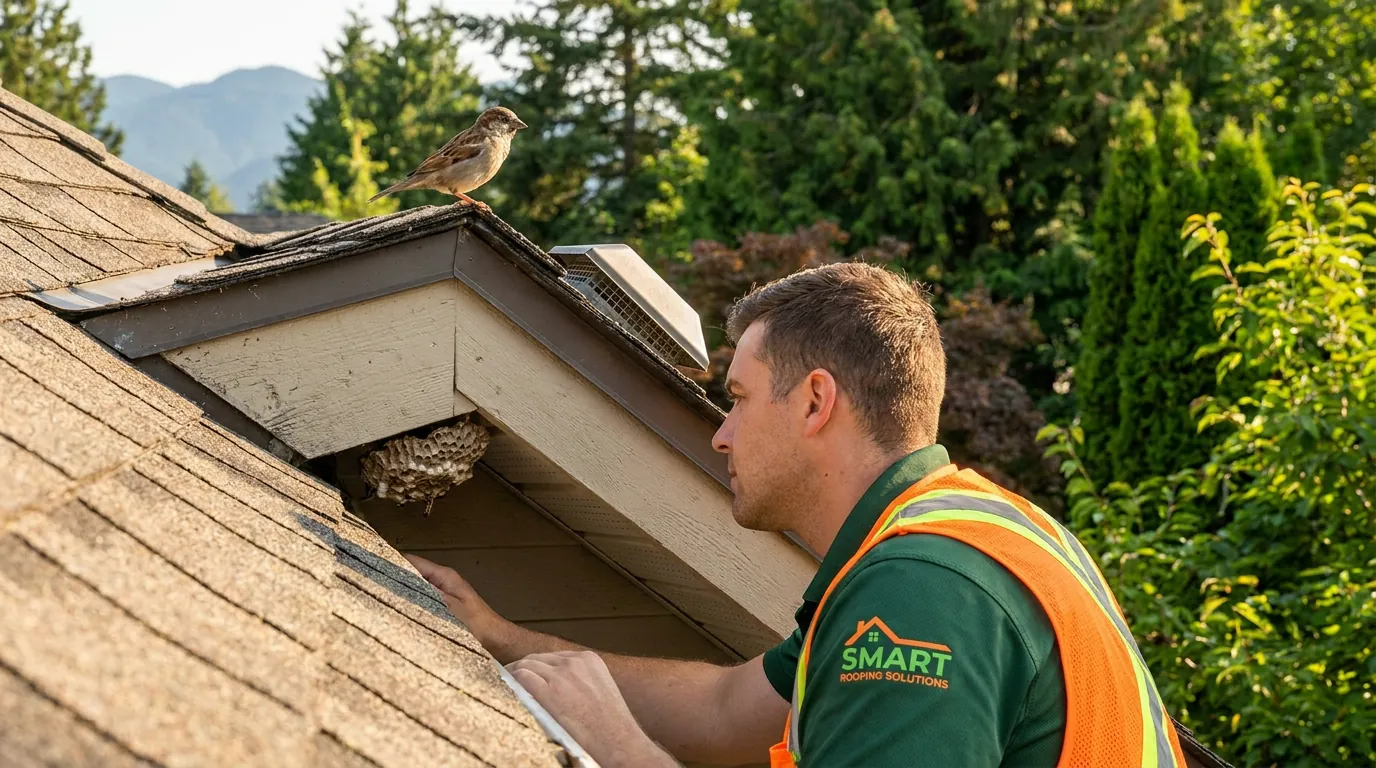
Coquitlam's mix of mature trees and established neighbourhoods makes it a wonderful place to live, and an appealing place for wildlife too. In summer, the warmth and long days bring birds, wasps, and rodents looking for sheltered places to nest, and the roofline is prime real estate. Left alone, these pests do more than make noise; they damage roofing, block ventilation, and create entry points that lead to leaks.
Here is what to watch for, how pests get onto your roof, and how to keep them from settling in.
Common Roof Pests in Summer
Birds
Birds nest in gaps under eaves, in roof vents, and behind loose flashing. Their nests block airflow and gutters, and droppings are acidic enough to wear at roofing materials over time. A blocked vent from a bird nest can trap heat and moisture in the attic, which causes problems well beyond the nest itself.
Wasps and Hornets
Wasps love sheltered, sunny spots under eaves, in soffits, and inside roof vents. Beyond the obvious sting risk when you are near the roof, nests in vents and soffits block ventilation. Coquitlam homes with deep eaves and wood soffits are especially attractive to them in midsummer.
Rodents
Rats and squirrels are agile climbers and persistent chewers. They reach the roof along overhanging branches, fences, and downspouts, then exploit any small gap to get into the attic. Once inside, they gnaw wood, insulation, and even wiring, and they widen small openings into bigger ones.
Insects
Carpenter ants and other wood-boring insects are drawn to damp wood, which is exactly what they find where a small leak has softened the roof deck or fascia. They are often a sign of an existing moisture problem rather than the original cause.
Why Coquitlam Roofs See More Pests
Coquitlam's appeal, its mature tree canopy and its proximity to parks, ravines, and the mountains, is exactly what makes its roofs attractive to wildlife. Neighbourhoods backing onto green space see more squirrels, rats, and birds moving between the trees and the rooftops. Older homes with wood soffits and deep eaves offer more nooks for nesting than newer, tightly sealed construction. And the same summer warmth that makes the area so pleasant draws wasps to sunny, sheltered spots under the eaves. None of this makes pests inevitable, but it does mean Coquitlam homeowners benefit from staying a step ahead, especially where mature trees overhang the roof.
How Pests Get Onto Your Roof
Most roof pests rely on a few common routes:
- Overhanging tree branches that act as a bridge from the canopy to the roof
- Gaps in soffits and fascia where wood has aged or pulled away
- Uncapped or damaged roof vents that offer a ready-made opening
- Loose or lifted flashing around chimneys and roof edges
- Downspouts and trellises that give rodents a climbing path
In Coquitlam's tree-heavy areas, overhanging branches are the single most common highway onto the roof.
Signs You Have a Roof Pest Problem
You may not see the pests directly, but the signs are usually clear:
- Scratching, scurrying, or buzzing sounds from the attic or eaves
- Nesting material poking out of vents or under eaves
- Droppings on the roof, in the attic, or around the foundation
- Visible wasp nests under the eaves or at vent openings
- Chewed wood, insulation, or wiring in the attic
- Daylight visible through a gap in the roofline that was not there before
The Damage Pests Cause
Pests rarely cause one isolated problem. Blocked vents lead to heat and moisture buildup, which ages shingles and the roof deck. Chewed and widened openings let water in. Nesting debris clogs gutters and downspouts. And the gaps pests create become entry points for the next animal that comes along. A small pest issue ignored over a summer can turn into a moisture and ventilation problem by fall.
The Cost of Waiting
A pest problem rarely stays small. A single gap a squirrel chews becomes an entry for rain and for the next animal that comes along. Nesting debris that blocks a vent traps moisture that rots the deck. Droppings left over a season wear at roofing materials and create a health concern in the attic. Addressing the access point early, while it is still one small repair, almost always costs far less than dealing with the moisture damage, ventilation problems, and repeat infestations that follow when it is left alone.
How to Keep Pests Off Your Roof
Prevention is far easier than eviction:
- Trim back branches so they do not overhang or touch the roof; this removes the main bridge for birds and rodents alike
- Cap and screen vents so they ventilate without offering an opening
- Seal gaps in soffits, fascia, and around the chimney before nesting season
- Keep gutters clear so debris does not build into nesting material
- Address small repairs promptly, since a lifted shingle or loose flashing is an open invitation
Regular roof maintenance catches these vulnerabilities early, before a pest finds them. An annual look at vents, flashing, and the soffit line closes the doors pests would otherwise use.
When to Call a Professional
Pest control handles removing the animals and nests, but the roof side matters just as much. Once pests are gone, the damage and entry points need proper repair, or the next animal simply moves in. If pests have chewed openings, lifted flashing, or damaged vents, a roof repair seals the building back up the right way. If you are not sure how a pest is getting in, a roof inspection can trace the entry point and recommend the fix.
Keep Your Roof Yours
A roof free of nests and gnaw holes is a roof that ventilates properly, sheds water cleanly, and lasts longer. A little summer prevention, branches trimmed, vents capped, gaps sealed, keeps Coquitlam's wildlife where it belongs. If pests have found their way onto your roof, call us at 778-238-3280 or request a quote and we will help you close it up.
Frequently Asked Questions
What attracts pests to my roof in summer?
Can roof pests really cause leaks?
How do I keep birds and rodents off my roof?
Do I need a roofer or a pest control company?
Are wasp nests in roof vents a problem?
Need Professional Help?
Contact Smart Roofing Solutions for a free consultation and estimate.