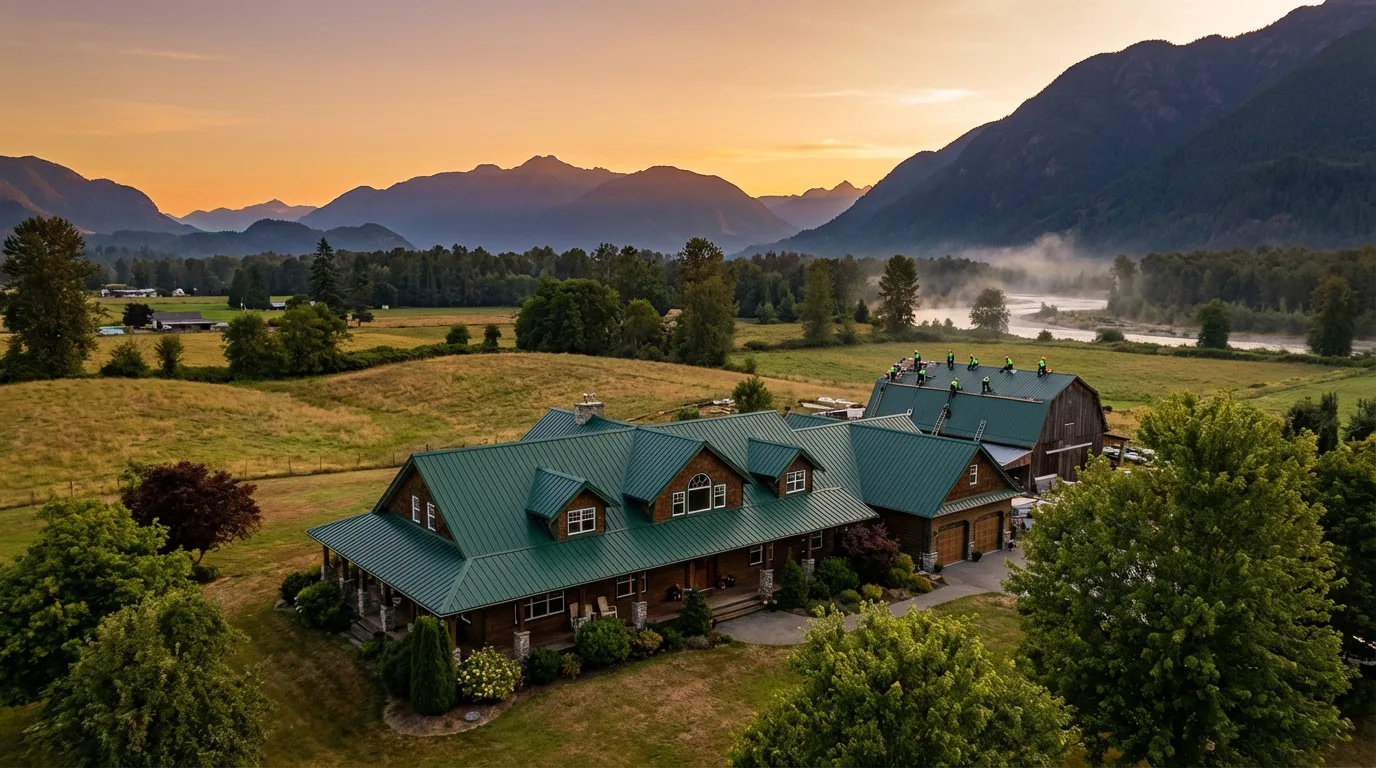
Chilliwack's mix of agricultural land, rural acreages, and mountain-edge properties creates roofing situations that suburban contractors don't always understand. Larger roof areas, multiple outbuildings, wildlife interactions, and variable access conditions all affect how a roofing project is planned and executed.
Whether you're on a working farm in the Sardis prairie, an acreage along Chilliwack River Road, or a rural property in Rosedale or Yarrow, here's what to consider for your roofing project.
Larger Roofs and Multiple Buildings
The most obvious difference between rural Chilliwack properties and suburban homes is scale. A typical acreage might include:
- Main residence with a larger footprint than a city home
- Detached garage or workshop with its own roofline
- Barn, shop, or equipment storage buildings
- Guest house or secondary suite above a garage
Each structure has its own roofing needs, and they don't all need the same material or approach. Your home might warrant architectural shingles or metal roofing, while a shop or barn is better served by metal panels or commercial-grade roofing that prioritizes function over appearance.
When planning roofing work, getting quotes for all buildings at once can save on mobilization costs - getting equipment and materials to a rural site is a significant expense, and doing it once for multiple structures is more efficient.
Material Choices for Chilliwack Properties
Metal Roofing - The Rural Workhorse
Metal roofing is the most popular choice for rural Chilliwack properties, and for good reason:
- Longevity - 40-70 years means you're not re-roofing outbuildings every 20 years
- Low maintenance - critical when you have multiple roofs to maintain
- Snow shedding - steep metal roofs clear snow quickly, reducing structural load
- Fire resistance - important for properties near the forest interface in areas like Ryder Lake and the Chilliwack River Valley
- Durability - handles falling branches, heavy rain, and wind better than shingles
For barns, workshops, and storage buildings, corrugated or standing seam metal panels are the standard. For the main residence, metal shingles or standing seam offer a more refined look while maintaining all the performance benefits.
Asphalt Shingles
Architectural shingles remain a solid choice for the main residence. They cost less than metal, come in a wide range of styles, and last 20-25 years in Chilliwack's climate. The trade-off is higher maintenance and shorter lifespan compared to metal.
Cedar Shake
Cedar shake has a long history in the Fraser Valley, and some Chilliwack homeowners prefer the natural look. Keep in mind that cedar requires more maintenance in this climate - moss treatment every 2-3 years and regular inspection for splitting and decay. On a large rural home, that maintenance adds up.
Chilliwack-Specific Challenges
Wildfire Interface
Properties along the Chilliwack River Valley, Ryder Lake, and the mountain edges sit in the wildfire interface zone. If your home is in or near a designated interface area:
- Metal roofing is strongly recommended for fire resistance
- Class A fire-rated shingles are the minimum if you prefer shingles
- Cedar shake is a poor choice in interface zones due to its combustibility
- Clear combustible debris from roof surfaces and gutters regularly
- Check with the City of Chilliwack for current FireSmart guidelines in your area
Heavy Rainfall and Snow Load
Chilliwack gets over 1,500 mm of precipitation annually, with properties at higher elevations receiving even more. Snow loads are a real consideration for buildings at elevation - your roof structure needs to handle the weight of wet, heavy Fraser Valley snow.
When re-roofing, we assess the structure's capacity and recommend reinforcement if needed. Adding weight with multiple shingle layers on a building that's already handling snow load is risky - tear-off to the deck is usually the better approach.
Wildlife
Rural Chilliwack properties deal with wildlife interactions that suburban homes don't:
- Woodpeckers can damage cedar shake and even composite materials. Metal roofing is woodpecker-proof
- Raccoons and squirrels create entry points by tearing at damaged soffit and fascia. Keeping these trim components in good condition prevents wildlife access to the attic
- Birds nesting in open soffits or gutter systems. Proper soffit venting and gutter guards discourage nesting
Access and Logistics
Getting roofing materials to a rural property can be more complex than a suburban job:
- Narrow or unpaved driveways may limit delivery truck access
- Distance from suppliers can add delivery surcharges
- Power availability for tools may require a generator on some properties
- Staging areas for materials need to be identified in advance
A good contractor plans these logistics before the job starts. When we quote rural properties, we do a site visit that includes access assessment so there are no surprises on installation day.
Tree Cover and Debris
Many Chilliwack acreages are surrounded by or adjacent to forest. Heavy tree cover means:
- More debris in gutters requiring frequent cleaning or gutter guard installation
- Moss growth on shaded roof surfaces, especially north-facing slopes
- Branch impact risk from overhanging trees
- Reduced UV exposure on shaded roofs, which actually extends shingle life
Trimming branches that overhang the roof by at least 6 feet reduces debris load and branch impact risk. For homes deep in tree cover, metal roofing's moss resistance and durability are significant advantages.
Multiple Roof Projects - Prioritizing
If you have several buildings that need roofing work, here's how we recommend prioritizing:
- Main residence first - this is where you live and where water damage has the greatest financial impact
- Buildings with active leaks - stopping water damage is always urgent
- Heated buildings (workshops, suites) - these have the same condensation and ventilation concerns as your home
- Unheated storage buildings - these are more tolerant of minor issues and can often wait
Bundling multiple buildings into one project reduces mobilization costs and may qualify for volume pricing on materials.
The Gutter System
Rural properties with larger roof areas generate more water runoff, and that water needs to go somewhere. Undersized gutters that work fine on a suburban home may not handle the flow from a large rural roofline. If you're re-roofing, it's an ideal time to assess and upgrade your gutter system too. Our sister company Smart Gutter Solutions works with us on coordinated roof and gutter projects across Chilliwack.
Get a Site Assessment
Every rural property is different, and the only way to get an accurate plan and price is with an on-site visit. We'll assess each building's condition, discuss material options for each structure, evaluate access logistics, and provide a clear quote with no surprises. Call us at 778-238-3280 or request a quote.
Frequently Asked Questions
What is the best roofing material for a Chilliwack acreage?
Do I need to worry about fire ratings on my roof in Chilliwack?
Can you roof multiple buildings in one project?
How do I prepare my rural property for a roofing project?
How much does roofing cost for a large rural home in Chilliwack?
Need Professional Help?
Contact Smart Roofing Solutions for a free consultation and estimate.