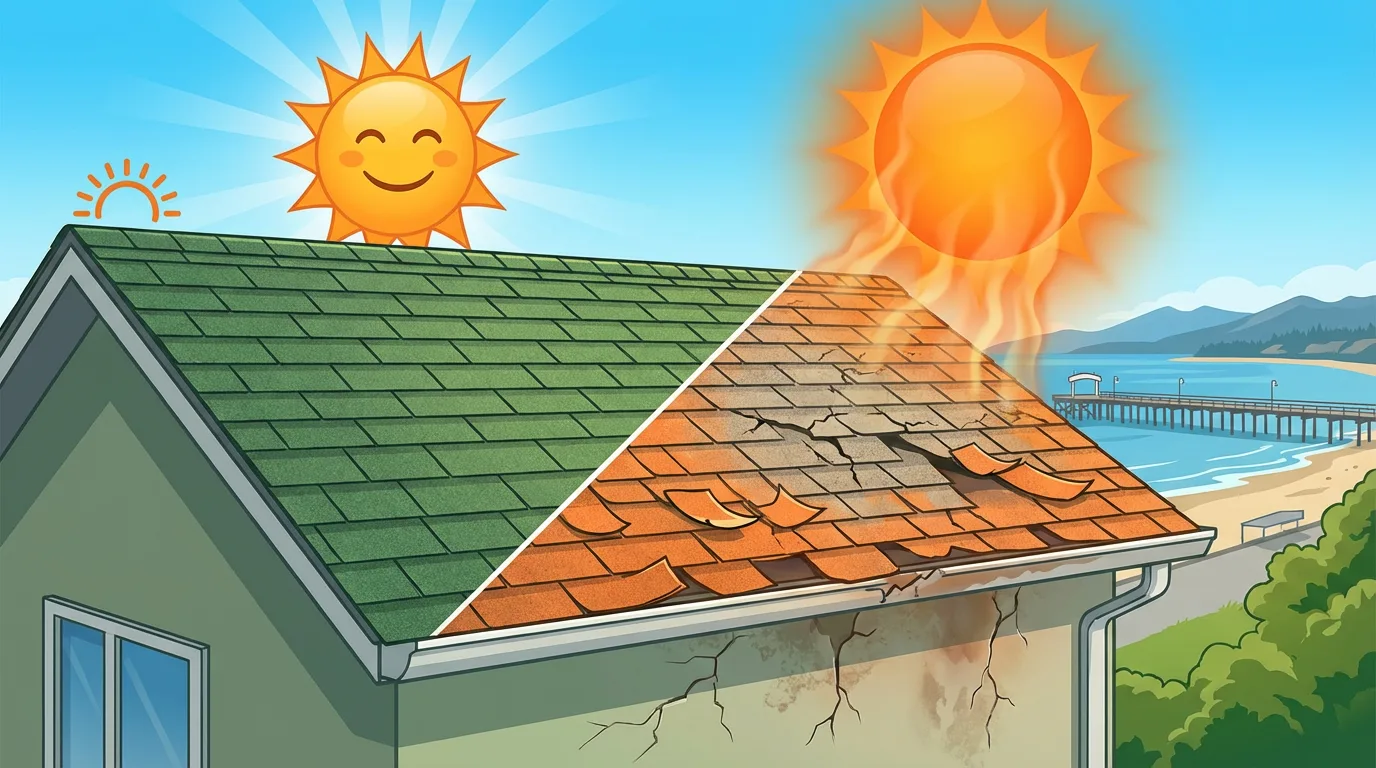
White Rock enjoys more sunshine than most of the Lower Mainland. The city's south-facing position along Semiahmoo Bay and relatively low cloud cover compared to areas north of the Fraser River mean roofs here get significantly more UV exposure throughout the year. While that sunshine is part of what makes White Rock appealing, it's also quietly shortening your roof's lifespan.
Here's how UV damage works, what it looks like, and how to protect your roof from premature aging.
How UV Radiation Damages Roofing Materials
Asphalt Shingles
UV radiation is the primary aging mechanism for asphalt shingles. Here's the process:
- UV breaks down the asphalt binder that holds the shingle together. The oils in the asphalt evaporate over time, causing the shingle to become dry and brittle
- Granules loosen and fall off as the binder deteriorates. These granules are your shingle's sunscreen - they reflect UV and protect the asphalt underneath. As they shed, deterioration accelerates
- Shingles curl and crack once they've lost enough flexibility. Curled edges lift in wind and allow water underneath
- Color fades unevenly as UV exposure varies across the roof surface. South-facing slopes fade faster than north-facing ones
In White Rock, south-facing roof slopes can age 3-5 years faster than north-facing slopes on the same home. Homes along the waterfront and on the hillside above Marine Drive get the most direct sun exposure.
Cedar Shake
UV causes cedar to dry out, crack, and split. The natural oils that give cedar its weather resistance evaporate under sustained sun exposure. Without regular treatment, sun-dried cedar shakes become brittle and vulnerable to wind damage. Cedar roofs on exposed hillside homes in White Rock's upper neighborhoods need more frequent maintenance than those in shadier locations.
Metal Roofing
Metal handles UV far better than asphalt or cedar. The metal itself is unaffected by UV radiation. However, painted or coated metal roofing can experience color fading over 15-20 years of sun exposure. Modern factory finishes with ceramic-coated pigments resist fading much better than older paint technologies.
Flat Roofing Membranes
Some White Rock homes, particularly newer builds and those with rooftop decks, have flat or low-slope sections with membrane roofing. UV is the primary enemy of TPO, EPDM, and modified bitumen membranes. Without UV-reflective coatings, these membranes can degrade within 10-15 years in direct sun.
Signs of UV Damage on Your Roof
Walk your property and look for these indicators:
- Granule loss - check your gutters and downspout discharge points for accumulated shingle granules. Some loss is normal on new roofs, but heavy accumulation on an older roof signals advanced UV deterioration
- Color variation between roof slopes - if your south-facing slope looks noticeably lighter or more faded than the north side, UV is doing its work
- Curling at shingle edges - especially on the south and west-facing slopes that get afternoon sun
- Cracked or split shingles - brittle shingles that snap rather than flex when touched
- Exposed fiberglass mat - when granules are completely gone, you'll see the dark fiberglass backing. This is an urgent sign - the shingle is no longer protecting your roof deck
If you're seeing these signs, a roof inspection can assess how much life remains and whether repairs or replacement are needed.
How to Protect Your Roof from UV Damage
Choose the Right Materials
If you're installing a new roof, material choice is your best defense:
- Metal roofing offers the best UV resistance and is increasingly popular in White Rock for this reason
- Architectural shingles with algae-resistant granules are the standard for shingle roofs - they reflect more UV than basic 3-tab shingles
- Cool roof shingles with reflective pigments reduce UV absorption by up to 40%
- Lighter colors reflect more solar energy than darker shades, reducing both UV damage and attic heat
Maintain Proper Ventilation
A well-ventilated attic prevents heat buildup that compounds UV damage from above. When your attic overheats in summer, it bakes the underside of your roof deck at the same time UV is attacking from the top. Ridge vents and soffit vents working together keep air moving and temperatures down.
White Rock homes on the hillside with southern exposure can see attic temperatures above 60 degrees Celsius in summer without adequate ventilation. That heat accelerates shingle deterioration from the inside out.
Keep Your Roof Clean
Debris sitting on your roof - leaves, needles, dirt - can trap heat against the surface and create hot spots. Regular cleaning reduces this effect. More importantly, keeping debris clear also prevents moisture problems that compound UV damage.
Our roof maintenance service includes cleaning and inspection to address both UV and moisture concerns.
Trim Trees Strategically
This is a balancing act in White Rock. Some shade from trees reduces UV exposure and extends shingle life. But too much shade promotes moss growth, which causes its own set of problems. The ideal is dappled shade that reduces peak UV without creating constant dampness.
Schedule Regular Inspections
UV damage is gradual and easy to miss until it's advanced. A professional inspection every 1-2 years catches early granule loss and curling before they lead to leaks. Early intervention - such as sealing curled edges or applying protective coatings - can add years to your roof's life.
The Summer Factor
While UV exposure happens year-round, the summer months from June through September deliver the most intense radiation. Roof surface temperatures in White Rock can exceed 70 degrees Celsius on a hot July afternoon. This thermal cycling - extreme heat during the day followed by cooling at night - causes expansion and contraction that loosens granules and opens seams.
If you're planning roof work, having it done before summer means your new materials start their life in the mild spring conditions and have time to settle before the intense heat hits.
Working With Your Gutters
UV-damaged shingles shed more granules than healthy ones, and those granules end up in your gutters. Heavy granule accumulation creates a gritty sludge that blocks downspouts and adds weight to the gutter system. If you're noticing more debris in your gutters than usual, UV deterioration may be the source. Our sister company Smart Gutter Solutions can keep your gutters flowing while we address the roof above.
Get Ahead of Sun Damage
UV damage is inevitable, but its impact can be managed with the right materials, proper ventilation, and regular maintenance. If your White Rock roof is showing signs of sun aging, a professional assessment tells you where things stand and what your options are. Call us at 778-238-3280 or request a quote.
Frequently Asked Questions
Does sun damage void my roof warranty?
Which side of the roof wears out first?
Do lighter colored shingles last longer?
How can I tell if my roof has UV damage?
Is metal roofing better than shingles for sunny areas?
Need Professional Help?
Contact Smart Roofing Solutions for a free consultation and estimate.