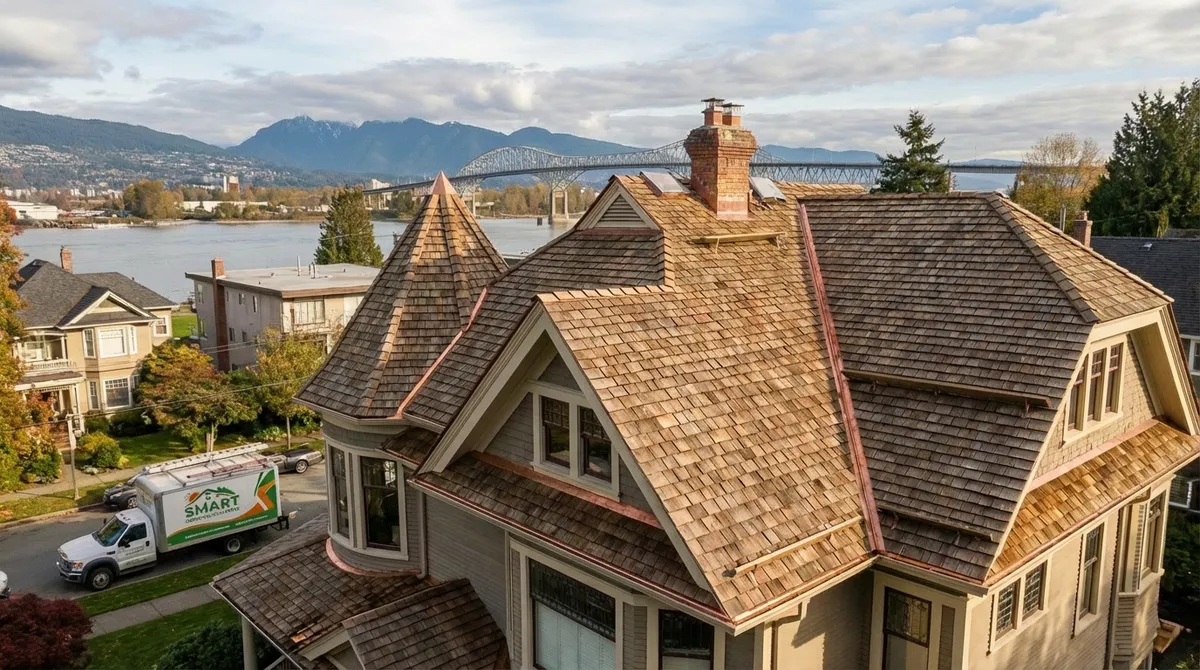
New Westminster is home to some of the oldest residential neighborhoods in Metro Vancouver. The Queen's Park Heritage Conservation Area alone contains over 300 homes built between the 1880s and 1940s, and heritage properties are scattered throughout the Brow of the Hill, Sapperton, and other established neighborhoods. These homes are part of what makes the Royal City special - and they come with roofing considerations you won't find in newer construction.
If you own a heritage home in New Westminster, here's what you need to know about maintaining, repairing, or replacing your roof.
What Makes Heritage Roofs Different
Heritage homes weren't built with modern roofing standards. Understanding the differences helps you make better decisions:
Unique Roof Designs
Victorian, Edwardian, and Craftsman-era homes in New Westminster feature architectural details that modern homes typically don't:
- Steep pitches common in Victorian-era Queen Anne styles
- Multiple dormers and complex intersecting rooflines
- Turrets and towers on some Queen's Park and Brow of the Hill properties
- Decorative ridge caps and finials that require careful preservation or reproduction
- Wide eave overhangs typical of Craftsman bungalows
These details add complexity to any roofing project and require a contractor experienced with heritage-style construction.
Older Roof Structures
The underlying structure of a heritage home - rafters, sheathing, and framing - may be over a century old. While old-growth lumber used in these homes was often superior to modern framing materials, decades of exposure to moisture, poor ventilation, and previous repair work can leave structural issues hidden beneath the surface.
Non-Standard Dimensions
Heritage homes weren't built to today's standardized measurements. Rafter spacing, sheathing thickness, and even the dimensions of the roof itself can differ from modern construction, which means off-the-shelf solutions don't always fit.
Heritage Conservation Rules in New Westminster
If your home is within the Queen's Park Heritage Conservation Area or is individually designated as a heritage property, there are rules about what you can and can't do with your roof.
Heritage Conservation Area Guidelines
The City of New Westminster has specific guidelines for exterior alterations to homes in the Queen's Park Heritage Conservation Area. For roofing, the key points are:
- Material appearance should be consistent with the home's heritage character
- Color and profile of new roofing materials should be sympathetic to the original design
- Heritage Alteration Permits (HAPs) may be required for certain changes, including roof replacement with different materials
Before starting a roofing project on a heritage property, check with the City of New Westminster's planning department about what approvals are needed. It's much easier to get this sorted before work begins than to address it after the fact.
What This Means in Practice
In most cases, you can replace your roof with modern materials as long as the appearance is compatible with the heritage character. This means:
- Architectural asphalt shingles in appropriate colors are generally acceptable
- Metal roofing in profiles that complement the home's era may be suitable
- Concrete or clay tile may be appropriate for certain architectural styles
- The overall look from the street should remain consistent with the neighborhood character
Choosing Roofing Materials for Heritage Homes
Asphalt Shingles
Architectural asphalt shingles are the most practical choice for most heritage home reroofing projects. They're available in heritage-appropriate colors and profiles, they're relatively cost-effective, and they perform well in New Westminster's wet climate. Look for designer shingles that mimic the look of wood shake or slate for a more period-appropriate appearance.
Cedar Shake
Many heritage homes in New Westminster originally had cedar shake roofs. Replacing cedar with cedar maintains historical authenticity, but the maintenance requirements are significant - regular moss treatment, preservative applications, and more frequent repairs. Some homeowners who value authenticity choose cedar despite the higher upkeep.
Metal Roofing
Standing seam metal or metal shingle profiles can work well on certain heritage styles, particularly Craftsman and later-era homes. Metal offers excellent longevity (40-70 years) and low maintenance. For Victorian-era homes with more ornate rooflines, the style fit requires more careful consideration.
Slate and Tile
Some New Westminster heritage homes originally featured slate or tile roofs. Modern synthetic slate products offer the look of natural slate without the extreme weight and cost. If your home had slate originally, this can be a good option for maintaining period appearance.
Working With Complex Rooflines
Heritage homes often have rooflines that are significantly more complex than modern construction. This complexity affects roofing projects in several ways:
More Flashing Details
Every valley, dormer, chimney, and roofline transition needs proper flashing. Heritage homes can have dozens of these transitions, and each one is a potential leak point. Skilled flashing work is the difference between a heritage roof that performs well and one that leaks.
Longer Project Timelines
The complexity and care required for heritage roofing projects means they take longer than straightforward re-roofs. Plan for a project timeline that accounts for unexpected discoveries (hidden damage, non-standard framing) and the precision work required around architectural details.
Structural Assessment
Before any reroofing project on a heritage home, the underlying structure should be assessed. This may reveal:
- Rot or water damage in rafters or sheathing from previous leaks
- Inadequate ventilation that needs to be addressed
- Previous repairs or modifications that don't meet current building standards
- Load-bearing considerations if switching to a heavier roofing material
Maintenance Tips for Heritage Roofs
Heritage home roofs benefit from more frequent attention:
- Inspect twice yearly (spring and fall) given the age and complexity of these roofs
- Address moss promptly - heritage neighborhoods in New Westminster have mature tree cover that promotes moss growth
- Maintain gutters diligently - complex rooflines channel water in more directions, and clogged gutters can cause water damage to ornamental trim and siding. Professional gutter services help keep water flowing where it should
- Check flashing annually - the numerous flashing points on heritage roofs are the most likely leak sources
- Preserve architectural details - ridge caps, finials, and decorative elements should be maintained or reproduced during repairs
Finding the Right Contractor
Not every roofer has experience with heritage homes. When choosing a contractor for your New Westminster heritage property, ask about:
- Previous work on heritage or heritage-style homes
- Familiarity with City of New Westminster heritage conservation guidelines
- Approach to structural assessment before reroofing
- How they handle complex flashing details and architectural elements
- Willingness to work with heritage consultants if needed
Ready to Discuss Your Heritage Roof?
If your New Westminster heritage home needs roof work - whether it's maintenance, repair, or full replacement - our team has experience with the unique demands of older properties. We provide residential roofing services in New Westminster and understand the care these homes deserve. Call 778-238-3280 or request a quote to start the conversation.
Frequently Asked Questions
Do I need a Heritage Alteration Permit to replace my roof in New Westminster?
What roofing materials are appropriate for heritage homes?
Does a heritage roof cost more to replace?
Can I change my heritage home's roofing material?
How often should heritage home roofs be inspected?
Need Professional Help?
Contact Smart Roofing Solutions for a free consultation and estimate.