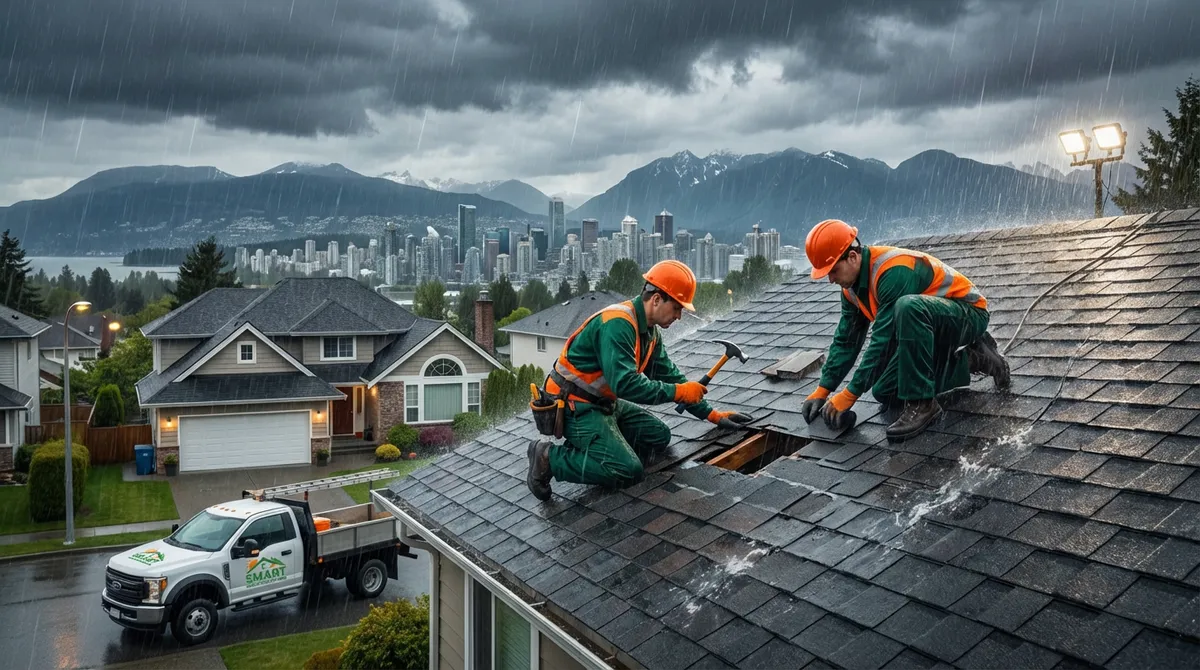
You notice a water stain spreading across your ceiling. Or worse, water is actively dripping into your home during a rainstorm. A roof leak is one of those situations where the first few hours matter. What you do immediately can be the difference between a manageable repair and extensive water damage.
Here's a step-by-step guide for Metro Vancouver and Lower Mainland homeowners dealing with a sudden roof leak.
What to Do Right Now
1. Contain the Water
Your first priority is limiting interior damage:
- Place buckets or containers under active drips
- Move furniture, electronics, and valuables away from the affected area
- Lay down towels or tarps to protect flooring
- If water is pooling on the ceiling and creating a bulge, carefully poke a small hole in the center with a screwdriver to let the water drain into a bucket. This prevents the weight of pooled water from collapsing the ceiling
2. Document Everything
Before you clean up, take photos and video of:
- The leak location on the ceiling or wall
- Any water damage to floors, furniture, or belongings
- The extent of the water spread
- If safely visible, the exterior area above the leak
This documentation is essential for insurance claims. Date-stamped photos are your best evidence.
3. Try to Identify the Source
If you can safely access your attic, look for:
- Active water flow along rafters or the underside of the roof deck
- Daylight coming through the roof (visible in daytime)
- Wet insulation or stained wood
Important: water travels. The spot where it enters the attic is often not directly above where it drips through the ceiling. Water can run along rafters and sheathing before finding a gap to drip through.
4. Temporary Measures
If rain is ongoing and you can identify the approximate exterior source:
- Tarp from outside - if you can safely access the roof, a weighted tarp over the damaged area is the most effective temporary fix. Secure it with boards or weights, not nails (which create more holes)
- Roofing tape or caulk from inside - for small, identifiable gaps in the attic, roofing tape or caulk can slow water entry until a professional arrives
Safety warning: Do not go on a wet roof. Wet shingles are extremely slippery, and the risk of a fall is not worth a temporary fix. If you can't safely reach the area, wait for professional help.
5. Call a Professional
Contact a roofing company that handles emergency repairs. When you call, be ready to describe:
- When the leak started
- How much water is coming in
- The approximate location on the roof
- Whether you can see obvious damage from the ground
Common Causes of Emergency Roof Leaks
Understanding what caused the leak helps with both the immediate fix and preventing future problems:
Storm Damage
High winds can lift or tear shingles, expose the underlayment, and break flashing seals. Metro Vancouver and the Lower Mainland see several significant windstorms each year, often during spring and fall. A roof that seemed fine yesterday can have multiple vulnerabilities after a single strong storm.
Failed Flashing
Flashing around chimneys, skylights, vents, and wall transitions is where many leaks originate. The sealant deteriorates over time, and the metal can corrode or pull away from the surface. These failures often go unnoticed until a heavy rain finds the gap.
Clogged Gutters and Ice Dams
When gutters are blocked, water backs up under the roof edge. In Metro Vancouver, this is more common than ice damming, but both create the same problem - water getting under the shingles and into the roof assembly. Regular gutter cleaning is one of the best preventive measures against this type of leak.
Aging Materials
Shingles past their expected lifespan become brittle, lose adhesion, and develop gaps. A roof that's been "fine for years" can suddenly spring multiple leaks when the materials reach their failure point.
Pipe Boot Failures
The rubber boots around plumbing vent pipes dry out and crack over time. They're a common, often overlooked leak source that's easy to spot during an inspection but invisible from the ground.
The Emergency Repair Process
When we respond to an emergency roof leak, here's what typically happens:
Initial assessment - We identify the source of the leak and assess the extent of damage, both from the roof and from inside the attic.
Temporary stabilization - If conditions allow, we'll apply a temporary patch, tarp, or sealant to stop active water entry. The goal is to protect your home until a permanent repair can be completed.
Permanent repair plan - Once the immediate crisis is managed, we provide a detailed assessment of what permanent repairs are needed, including materials, timeline, and cost.
Insurance documentation - If you're filing a claim, we provide the documentation your insurer needs, including photos, damage assessment, and a detailed repair scope.
Working With Your Insurance
Most homeowner policies cover sudden, accidental water damage from roof failures. To give your claim the best chance:
- Report the damage promptly to your insurance company
- Keep all documentation organized - photos, repair invoices, contractor assessments
- Don't make permanent repairs before the adjuster visits (temporary protective measures are fine and expected)
- Get an independent assessment from a roofing professional, not just the insurance company's recommended contractor
Preventing Future Emergencies
Most emergency leaks are predictable failures that could have been caught earlier:
- Annual roof inspections catch deteriorating flashing, aging shingles, and failing pipe boots before they leak
- Gutter maintenance prevents water backup along the roofline
- Prompt repair of minor damage keeps small problems small
- Attic checks after storms can reveal water entry before it reaches your ceiling
A roof maintenance plan is the most cost-effective way to avoid emergency situations.
Need Emergency Help?
If your roof is leaking and you need immediate assistance anywhere in Metro Vancouver and the Lower Mainland, call 778-238-3280. We respond to emergency roof repair calls and can help stabilize the situation quickly. You can also request a quote online for non-emergency assessments.
Frequently Asked Questions
How fast can you respond to an emergency roof leak?
Should I put a tarp on my roof myself?
Will my insurance cover an emergency roof repair?
How much does emergency roof repair cost?
Can a small roof leak cause major damage?
Need Professional Help?
Contact Smart Roofing Solutions for a free consultation and estimate.