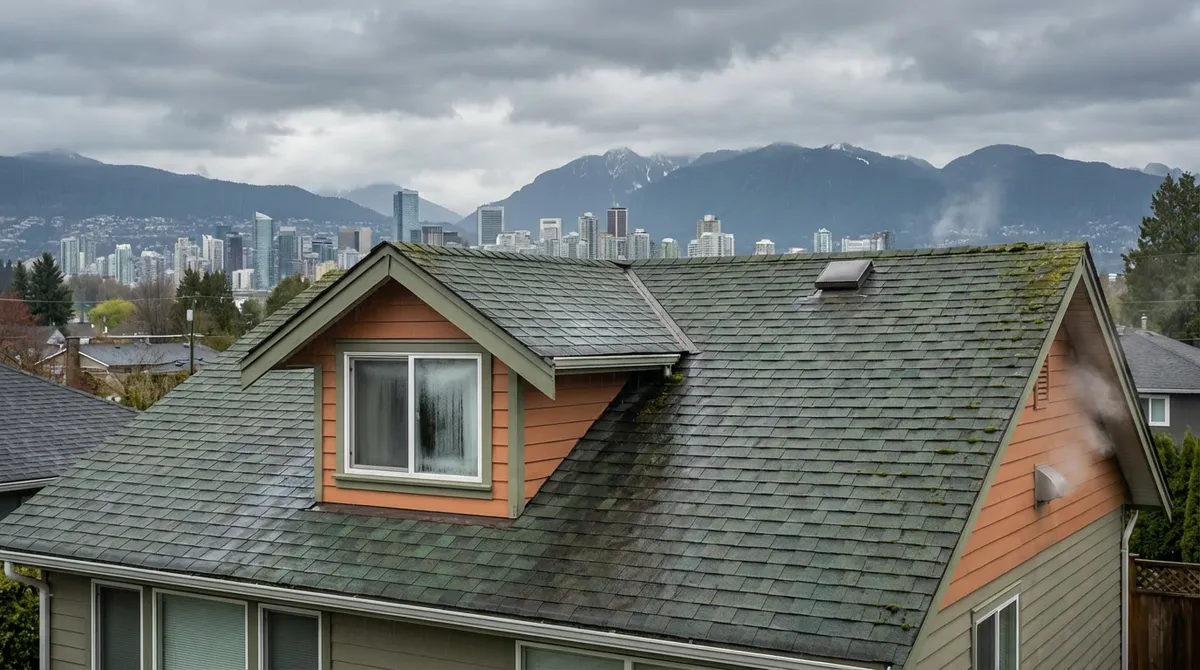
Roof ventilation is one of those things homeowners rarely think about until something goes wrong. But in Delta's climate - wet winters, warm summers, and proximity to the water - proper ventilation is critical to your roof's performance and lifespan. When it fails, the problems compound quickly.
Here's how to recognize ventilation issues and what you can do to fix them.
Why Ventilation Matters for Delta Homes
Your attic needs a balanced flow of air: cool air enters through soffit vents along the eaves, rises as it warms, and exits through ridge vents, turbine vents, or gable vents at the top. This airflow does two essential things:
In winter, it removes moisture that rises from the living spaces below. Without adequate ventilation, that moisture condenses on the underside of your roof deck, leading to mold, rot, and deterioration of your roofing materials from the inside out.
In summer, it expels trapped heat that builds up in the attic. Temperatures in an unventilated attic can exceed 60 degrees Celsius on a hot day, which bakes your shingles from below and significantly shortens their lifespan.
Delta's location near the Fraser River and Boundary Bay means humidity levels are often higher than other parts of Metro Vancouver, making proper ventilation even more important.
Signs Your Roof Has Ventilation Problems
Ice Buildup in Winter
While Delta doesn't get extreme cold, occasional freezing temperatures combined with poor ventilation can cause ice to form along the roof edge. Warm air trapped in the attic melts snow or frost on the upper roof; the meltwater runs down and refreezes at the colder eaves. This ice can back up under shingles and cause leaks.
Excessive Heat on Upper Floors
If your upstairs rooms are significantly hotter than the main floor during summer, poor attic ventilation is likely a factor. Trapped heat radiates down through the ceiling, making upper floors uncomfortable and forcing your air conditioning to work harder.
Mold or Mildew in the Attic
Check your attic periodically. If you see black spots on the underside of the roof deck, fuzzy growth on rafters, or smell a musty odor, moisture is accumulating because it has nowhere to go. This is one of the most common and damaging ventilation failures.
Peeling Exterior Paint
When moisture from a poorly ventilated attic migrates through walls, it can cause exterior paint to bubble and peel. If you're seeing paint failure on upper-story walls or soffits, the cause may be above rather than outside.
Premature Shingle Deterioration
Shingles that are curling, cracking, or losing granules well before their expected lifespan may be suffering from excessive heat. If your roof is aging faster than it should, ventilation is one of the first things to investigate.
High Energy Bills
A poorly ventilated attic makes your heating and cooling systems work harder year-round. If your energy costs seem disproportionate to your home's size, attic ventilation could be part of the problem.
Rusted Nails and Hardware
Metal components in your attic - nails, brackets, strapping - that show rust are a sign of chronic moisture exposure from inadequate ventilation.
Common Ventilation Problems in Delta Homes
Blocked Soffit Vents
Soffit vents are the intake part of the system, located along the underside of the roof overhang. They frequently get blocked by:
- Insulation pushed too close to the roof edge (a common installation mistake)
- Paint or stucco applied over the vent openings
- Debris, dirt, or pest nests
When soffit vents are blocked, air can't enter the attic and the entire ventilation system stops working.
Insufficient Exhaust Vents
Some older homes in Delta - particularly in Ladner and Tsawwassen - were built with minimal roof ventilation that doesn't meet current standards. A single gable vent or a couple of static roof vents may not provide enough exhaust capacity for the attic space.
Bathroom and Kitchen Fans Venting Into the Attic
This is a surprisingly common issue, especially in renovated homes. Exhaust fans are supposed to vent directly to the exterior through the roof or a wall. When they terminate in the attic instead, they dump warm, moist air right where you don't want it.
Vapor Barriers in the Wrong Place
An improperly placed vapor barrier can trap moisture in the attic assembly rather than keeping it out. This is a construction issue that sometimes shows up in renovations where insulation work was done without proper building science understanding.
How to Fix Ventilation Problems
Add or Clear Soffit Vents
Ensuring your soffit vents are open and unobstructed is often the single most impactful fix. If your home lacks soffit vents entirely, they can be added. Baffles can be installed to keep insulation from blocking existing vents.
Upgrade Exhaust Ventilation
If your roof doesn't have enough exhaust capacity, options include:
- Ridge vent - runs along the peak of the roof and provides continuous exhaust along the entire ridge line
- Turbine vents - wind-powered vents that actively pull air from the attic
- Static roof vents - passive vents that allow hot air to rise and escape
- Power vents - electrically powered fans for homes where passive ventilation isn't sufficient
The right choice depends on your roof's design and the size of your attic space.
Redirect Exhaust Fans
Any bathroom or kitchen fans venting into the attic need to be redirected to the exterior. This is a relatively straightforward fix that eliminates a major moisture source.
Ensure Balanced Airflow
Effective ventilation requires balance - roughly equal intake (soffit) and exhaust (ridge/roof) capacity. Too much exhaust without enough intake can actually pull conditioned air from inside the home, increasing energy costs.
The Connection to Your Gutter System
Poor ventilation doesn't just affect your roof - it impacts your gutters too. When moisture problems cause fascia rot, your gutter attachment points weaken. Ice buildup at the eaves can damage gutters and create overflow issues. Keeping your gutters in good condition works hand in hand with proper roof ventilation.
Get a Professional Assessment
Ventilation problems are best diagnosed by someone who can inspect both the attic and the roof exterior. Many issues have straightforward fixes, but the right solution depends on your specific home and how the current system was set up.
Our team provides roof maintenance services in Delta that include ventilation assessment and repair recommendations. Call 778-238-3280 or request a quote to schedule an inspection.
Frequently Asked Questions
How do I know if my roof has enough ventilation?
Can poor ventilation void my roof warranty?
What is the best type of roof vent for Delta homes?
How much does it cost to fix roof ventilation problems?
Should I check my attic ventilation in spring?
Need Professional Help?
Contact Smart Roofing Solutions for a free consultation and estimate.